rwandering.net
The blogged wandering of Robert W. Anderson
Author Archive
October 27, 2008 at 11:42 am · Filed under .NET, Grid Computing, Web 2.0
 Microsoft’s long awaited cloud platform has finally been unveiled here at PDC 2008. Late to the Internet, Microsoft hit it hard. Late to the cloud, Microsoft is doing the same with Windows Azure. Happily, this will put an end to all the guessing about what Zurich, Red Dog, biztalk.net, SSDS, Live Mesh, etc., actually are.
Of course, now begins the discussion of how all these pieces fit together.
This is not a simple approach like Amazon’s EC2 or Google App Engine. Not to trivialize either, but they are certainly easier to understand. Try explaining them to the proverbial grandmother — no problem, especially if you leave out virtualization and pythons 😉 (preemptive comment: I know AWS is much more than EC2 and that bigger and better things are coming from Google).
Regardless, the Microsoft Azure is multi-faceted. In typical Microsoft fashion, there is a lot for a developer to choose from:
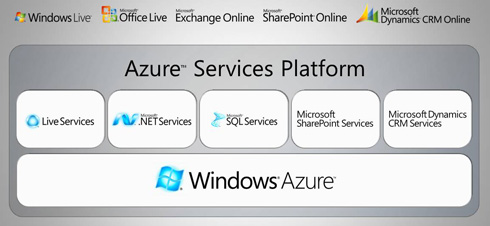
- Azure Storage, Management, and Compute. Run WCF/ASP.NET based services, with work queues and data storage.
- Microsoft .NET Services, nee biztalk.net (wrote about here). This gives you an Internet Service Bus, Access Control, and Workflow Services. Messages and workflow in the cloud connecting other cloud and enterprise offerings. Very big deal.
- Microsoft SQL Services, nee SQL Server Data Services or SSDS. Eventually a relational model in the sky, currently not too different from Azure Storage.
- Live Services: Not too much detail on this today, but this is clearly what was “Live Mesh”: a rich synchronization framework, “live operating environment” for writing applications to across the Web and on user’s devices.
- Windows Live (Live Office, Live Sharepoint, Live Dynamics CRM, etc). In-cloud applications extensible by partners and users with in-cloud and in-premises solutions.
It all does fit together, and will be of immediate value to developers. As Marc Jacobs of Lab49 said to me afterward,
We could make use of all of these services today.
Damned straight. It is the openness of this platform, the ability of developers to mix and match the different components, and to do it between the cloud and in-premises solutions that makes this such a winner.
This last point is an important one. Microsoft is in a unique position to help enterprise IT bridge to the cloud. While I don’t think Amazon and Google will cede that market to Microsoft, their current offerings aren’t a natural fit.
Taking this all together — not forgetting Microsoft’s leading developer productivity story — it looks like a home run to me.
[tags].NET, Azure, PDC2008, PDC, Microsoft, Zurich, Reddog[/tags]
Tags: .NET, Azure, Microsoft, PDC, PDC2008, Reddog, Zurich
October 19, 2008 at 11:20 am · Filed under .NET

I’m going to the PDC.
I am mostly excited to hear about how all Microsoft’s cloud + parallel programming + distributed computing story all fits together. And hopeful that it really does all fit together.
I’m interested in hearing more about Windows 7, but I’m not that excited about it.
As in all conferences, 99% of the value is in meeting and hanging out with people. If you are going too and want to meet up, let me know.
email me: robert at digipede dot net.
[tags]Microsoft, PDC2008, PDC[/tags]
Tags: Microsoft, PDC, PDC2008
October 13, 2008 at 10:12 pm · Filed under .NET
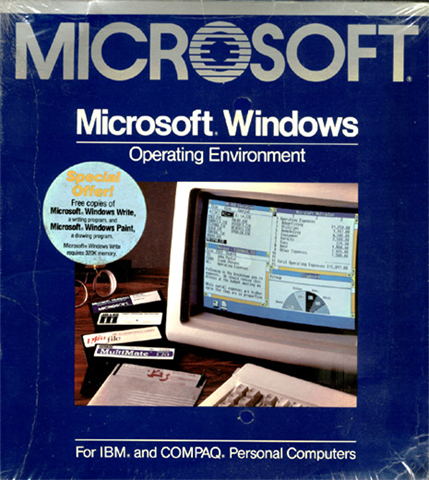
 First of all let me say that I’m not that excited about the “Windows” part of Windows 7. I’m sure that will change when I see it later this month at the PDC.
I have a long history as a Windows user. In fact, I have Windows 1 sitting on my desk. Actually, these are installation floppies for the Microsoft Windows Operating Environment.
I have disliked the Windows product naming convention since Windows 95. That should have been Windows 4.0 with some extra designation to distinguish it from NT. Since then, the naming of Windows versions has been absurd.
I’m thrilled that the next one is called Windows 7. I hope this is the end of the trend of seemingly arbitrary names interspersed by release years. If the subsequent name isn’t 7.x or 8, however, this will actually just have been worse then calling it 2010.
[tags]Windows, Windows7, Microsoft, PDC[/tags]
Tags: Microsoft, PDC, Windows, Windows7
September 4, 2008 at 9:58 am · Filed under Grid Computing, Web 2.0

Google releases a new browser. The world declares “browser war” with some apprehension and relish. Web developers are cringing because browser compatibility is a major source of effort, cost, and frustration for software developers.
Q. Why would Google do this to us? Just to take away Microsoft browser share?
A. No.
Q. Are they doing this to extend the “Google OS” to the desktop in a way they control?
A. Probably, but that isn’t even their first concern.
Q. So, what is going on?
A. Well, I’m glad you asked.
Google is working to make their JavaScript-view of the Web as powerful as possible. This makes sense given their enormous investments in JavaScript and in their own application suite.
Contrary to the approaches of Microsoft and Adobe with their Rich Internet Applications (RIA) frameworks, Google has focused on JavaScript. Where Microsoft and Adobe are building a better user experience inside of a container, Google is creating a better user experience through dynamic HTML and AJAX techniques.
Their developer model includes building out tooling to make it easier to author AJAX applications. This includes the efforts made in the Google Web Toolkit (GWT) to enable modern IDE tooling for AJAX development. This allows developers to build maintainable object-oriented applications (in Java) that get converted and optimized to JavaScript. Plus it promises cross-browser compatibility.
On the client side, they have Google Gears to enable local storage, improved caching support, and offline mode.
Q. So what have they been missing? A browser?
A. Not exactly. They’ve been missing a JavaScript client runtime engine.
Google has made great advances in AJAX application development and tooling, but they have had to rely on others to provide reliability, responsiveness, performance, etc.
And that is what Chrome is about: taking control of the runtime engine for Google applications. This makes the Google applications way more compelling. More specifically, Chrome is about delivering that engine. As Google says, they would love it if other browsers adopt the engine too. I buy that.
Of course, by that time Chrome will be differentiated from its JavaScript engine. By then Chrome will be about the Google OS.
[tags]Google, Chrome, JavaScript, Microsoft, Silverlight, Flash, Adobe[/tags]
Tags: Adobe, Chrome, Flash, Google, JavaScript, Microsoft, Silverlight
July 28, 2008 at 1:09 pm · Filed under Miscellaneous
I posted Cloud Services Continuum a couple of weeks back. In that post I articulated a simplified view of cloud services and how they fit together. This was simple by design — others had found this view useful, so I wrote it down. I intentionally ignored some kinds of services, greatly simplifying the Infrastructure piece. In this post I delve deeper into infrastructure services. I’ll move on to platform next.
BTW: Stack is a more fitting word than continuum for various reasons, so I’m using that instead. And a shout out to Matias Wolsky — check out his SaaS Taxonomy Map.
Infrastructure as a Service
In my earlier post, I defined IaaS to include provisioning of hardware or virtual machines on which one generally has control over the OS; therefore allowing the execution of arbitrary software. This definition isn’t really enough, because there are many other kinds of infrastructure. Take a look at the services that are out there:
- connectivity / messaging services. Examples: Microsoft BizTalk Labs and Connectivity Services, Gnip.
- identity services. Countless OpenID identity providers, again the BizTalk Labs Identity Services.
- data storage. Examples: Amazon’s S3 and SimpleDB, Microsoft SQL Server Data Services.
One might argue that together these services create a “platform” — and they get close — but since none of these host general user-written code, they don’t quite get there.
Then, of course, there is flexible machine provisioning like Amazon EC2. These are definitely infrastructure — where the platform is the OS, Web servers, and other software.
Calling this all IaaS is fine — it is all infrastructure — but, maybe we should further divide these:
- Virtual Hardware Infrastructure
- Storage Infrastructure
- (Other) Infrastructure Services
Granted, these names need some work, but I think the categories are useful. And I won’t make them into acronyms because I think we have enough of those.
Tags: Amazon, AWS, cloud, Gnip, Google, IaaS, Microsoft, PaaS, SaaS, Salesforce, SSDS
July 24, 2008 at 8:46 am · Filed under Miscellaneous
I am http://identi.ca/rwandering. I am still http://twitter.com/rwandering. I don’t expect to drop Twitter. Oh, and I’m http://friendfeed.com/rwandering.
On its own, identi.ca is interesting because of its promise more than anything else. I do like:
- It has a clean UI.
- It supports OpenID as a logon.
- It supports XMPP.
- Twhirl supports it with XMPP! Very cool.
- I would like to see it supporting GNIP.
A couple of observations about these kinds of services:
- I want a simplified user experience here. I want one consolidated view across these types of services and the ability to update once and submit everywhere.
- I believe Twhirl is working on this.
- We need a web-only solution. This might be Friendfeed, but only if Friendfeed can aggregate views of those I follow across services.
- We need a Twhirl for mobile. Maybe TwitterBerry can go this way?
I really like the XMPP update, and I like using my GMail account for it — because of searchable history — but I don’t like getting duplicate messages in GTalk and Twhirl. One solution and a question:
- I can use a separate GMail account for these kinds of updates. Not ideal.
- Can Jabber servers understand a preferred client for messages sent by a specific contact? That way identi.ca updates could go only to Twhirl, if Twhirl is connected.
BTW: this post is testing WordIdentica a WordPress plugin for Identi.ca. This should send a dent to identi.ca when I update my blog. I use http://twitterfeed.com to do the same for Twitter.
[tags]identi.ca, twitter, twhirl, friendfeed, xmpp[/tags]
Tags: FriendFeed, identi.ca, twhirl, Twitter, xmpp
July 21, 2008 at 10:37 am · Filed under Miscellaneous
There are a lot of questions circling around the blogosphere about Microsoft’s plans in the cloud. These plans are clearly secret and tangled up with code words, but some bits are public and getting more so.
If you haven’t checked out BizTalk Labs and the Internet Service Bus, you can get an overview here. But more than an overview, you can download version 12 — OK, 0.12 — of the SDK and get started very quickly.
The Internet Service Bus consists of three main parts:
- Identity Service. A service to unify authentication and authorization across the Internet Service Bus with support for other identity providers.
- Connectivity Service. A general service to connect applications with message relay when necessary.
- Workflow. A service that runs Windows Workflow Foundation workflows in the cloud.
Workflow was added this week. Before that, the Internet Service Bus looked mostly like infrastructure, but with this new addition, it is moving up the stack towards platform.
I played with the SDK earlier in the week. The Workflow Service supports a set of cloud activities included in the SDK. Using these activities as building blocks, you can build simple workflows hosted by Microsoft in the cloud. The available activities for the cloud are only a subset of the standard .NET 3.0/3.5 activities, but I’ll bet more are added as the service matures.
Now, this is all a CTP and final plans aren’t public, but, a quick glance at the ISB and some very interesting possibilities emerge. For example, the existing features in the CTP today, would greatly ease the engineering effort of extending a Digipede Network into the cloud. Pretty cool, huh?
BTW: A recent comment on my blog shows that some people aren’t aware of another Microsoft Cloud service: SQL Server Data Services (or SSDS). That one is in a limited beta, but you can sign up for it at Microsoft Connect.
[tags]Cloud, Microsoft, IaaS, PaaS, BizTalk[/tags]
Tags: BizTalk, cloud, IaaS, Microsoft, PaaS
July 17, 2008 at 7:14 pm · Filed under Grid Computing, Web 2.0
Version 2.6 of WordPress came out the other day. From the announcement (WordPress › Blog » WordPress 2.6):
Version 2.6 “Tyner,” named for jazz pianist McCoy Tyner, contains a number of new features that make WordPress a more powerful CMS: you can now track changes to every post and page and easily post from wherever you are on the web, plus there are dozens of incremental improvements to the features introduced in version 2.5.
These feature changes are actually pretty big. Revision tracking? Support for Google Gears? Full support of SSL (finally)? Theme previews? Really cool “Press This” button? Big.
This feels to me like a major release. Probably not as major as the 2.5 release, but still pretty major.
In my book, 2.5 should have been version 3.0 and this one should have been 3.5.
Does the version number matter? Yeah, it does. It isn’t just about marketing. It signals something about the maturity of the product.
Disclaimer: I am not immune to such version number mistakes. After all, the Digipede Network 2.1 should have been version 2.5.
Tags: Digipede, Wordpress
July 3, 2008 at 4:09 pm · Filed under Grid Computing, Web 2.0
I have found myself talking about cloud services a lot recently. We have been talking about them here — there is an obvious synergy between what we do at Digipede and cloud services. And I’ve been talking about them externally too: at the recent CloudCamp, on the Gillmor Gang, and in all sorts of other interesting contexts.
Note that I refer to cloud services, not to the cloud. I am not interested in defining cloud as a term, because I don’t think it very useful. For those of us in the distributed computing space, cloud is the latest buzzword to compete with the word grid in terms of utter ambiguity. I think the ship has already sailed on this one and I’m not going to try to call it back.
So, everyone is talking about cloud services and much of the conversation centers on understanding them and how they are changing the landscape. Of course, cloud services are not one thing. I find it helpful to think about them as parts of a continuum. This seems useful regardless of the technical level of the people with whom I’m speaking.
 The diagram to the right shows this continuum from infrastructure to platform to software. Brief definitions of these parts are:
- Infrastructure includes provisioning of hardware or virtual computers on which one generally has control over the OS; therefore allowing the execution of arbitrary software.
- Platform indicates a higher-level environment for which developers write custom applications. Generally the developer is accepting some restrictions on the type of software they can write in exchange for built-in application scalability.
- Software (as a Service) indicates special-purpose software made available through the Internet.
I have indicated several companies that play at different parts of this stack. This list is not comprehensive nor does it attempt to represent motion across the stack.
One scenario in which I find myself talking about the continuum is when people equate Amazon EC2 with Google App Engine. EC2 is a flexible / scalable virtual hosting platform with provisioning APIs. It allows you to dynamically scale the number of instances of your OS (i.e., Linux). What you do with those instances is up to you. Google App Engine operates at a much higher level in the stack. It is a new software platform with specific APIs. It requires developers to build for this specific platform. yes, they are both in the cloud, but they are very different services.
Another scenario in which the continuum is useful is in thinking about what vendors and new entrants might be up to. The continuum makes one thing even more clear: many vendors that operate higher in the stack are relying on their own internal lower-level infrastructure or platform. This begs some questions: which vendors will expose lower-level interfaces? And of course, which vendors will move up the stack?
- SalesForce is already moving down with their PaaS offering.
- Any chance Google will expose its infrastructure stack? I doubt it, but I do expect them to move down a little.
- Some of the readers of this blog probably know better than I where Amazon and Microsoft are planning to go.
Yet another way it is useful is in comparing vendors inside of a particular category. Maybe I’ll write more on that later.
Is the continuum obvious? Using the definition of obvious from patent law, yes, but I think it a useful paradigm.
[tags]cloud, Microsoft, Amazon, Google, SaaS, IaaS, PaaS, SalesForce[/tags]
Tags: Amazon, cloud, Google, IaaS, Microsoft, PaaS, SaaS, Salesforce
June 24, 2008 at 12:45 pm · Filed under Miscellaneous
 Last weekend, my parked Audi was hit by a speeding vehicle. The damage was pretty major: body, mechanical damage, and a bent frame.
Thankfully nobody was hurt.
Yesterday, my insurance carrier has declared the car a total loss.
It was in good condition with only 48000 miles on it. I planned on keeping the car for a few more years.
These things happen. On to plan B.
But I am irked about the timing. I planned to make my next car a hybrid. Gas prices have spiked. Hybrids have gone up in price and I understand that some models have wait-lists. For example, if I want a Prius, I might have to wait months.
Now what do I do?
[tags]blog, personal[/tags]
Tags: blog, Personal
« Previous entries ·
Next entries »


 Microsoft’s long awaited cloud platform has finally been unveiled here at PDC 2008. Late to the Internet, Microsoft hit it hard. Late to the cloud, Microsoft is doing the same with Windows Azure. Happily, this will put an end to all the guessing about what Zurich, Red Dog, biztalk.net, SSDS, Live Mesh, etc., actually are.

 About me
 Main feed
 Email subscriptions
